8 Min Read
If you have lived in Georgia through the summer, you know how hot and humid it gets.
But it's not just people enduring the heat. Your home is feeling it too. It's not uncommon in places like Athens for daily highs in the summer to sit in the upper 80s to low 90s, with humidity hovering around a whopping 74%.
For vinyl siding, that kind of sustained heat is brutal. It's the primary reason panels buckle, ripple, and pull away from walls. If you've noticed your siding looking wavy or bowed after a Georgia summer, here's what's actually happening and what to do about it before it gets worse.
Use the links below to go to the sections that interest you:
- What Heat Does to Vinyl Siding
- The Three Color Categories That Hold Up in Georgia's Climate
- Colors to Avoid on Vinyl Specifically
- What to Do If Your Siding Is Already Warping
- The Benefits of James Hardie Siding
- The Bigger Picture: Siding as a System
- Frequently Asked Questions
- Before You Hire a Contractor
Disclaimer
This blog post is intended for informational purposes only and does not constitute tax or legal advice. Tax laws can vary based on location, personal financial circumstances, and annual updates from the IRS. Always consult a licensed tax professional or accountant to determine what deductions or credits apply to your specific situation.
What Heat Does to Vinyl Siding
Vinyl expands when it heats up and contracts when it cools down. That's by design, since the material is meant to move. The problem starts when that movement is restricted, accelerated, or pushed beyond what the panels can handle.
There are three main ways that happens in Athens:
Improper Installation
Vinyl siding is meant to be hung, not nailed flat. When panels are fastened too tightly, they can't slide within their mounting slots as temperatures rise. On a 90°F afternoon, a panel with no room to expand has nowhere to go except outward, and once vinyl deforms under heat, it rarely returns to its original shape. You should be able to nudge an installed panel slightly side to side with your hand. If you can't, it's too tight. It's one of the most common issues we see when evaluating homes across Athens, Clarke County, and Oconee County. Siding that was installed without adequate expansion clearance fails visibly within a few summers.
Dark Colors Absorbing Too Much Heat
Color choice has a direct impact on surface temperature. Sherwin-Williams notes that repainting vinyl with a darker color than the original is one of the most common causes of warping, as dark paint absorbs heat and transfers it to the substrate, causing expansion that the vinyl wasn't engineered to handle. The same principle applies to the original factory color: the darker the siding, the hotter the surface temperature on a sunny August afternoon.
Reflected Heat From Low-E Windows
Low-emissivity (Low-E) windows, the energy-efficient kind that are now standard in most new construction, can reflect concentrated beams of sunlight onto adjacent siding. That reflected heat creates localized hot spots intense enough to warp or even partially melt vinyl panels, even on a home with otherwise correct installation. If you're seeing warping in a single concentrated area near a window, this is likely the cause. Knowing whether your siding, windows, or doors need replacing can help clarify whether the issue is the material itself or something in the surrounding system.
The Three Color Categories That Hold Up in Georgia's Climate
Whether you're staying with vinyl or upgrading to fiber cement, color selection matters in this climate. Here's how to think about it if longevity is the priority.
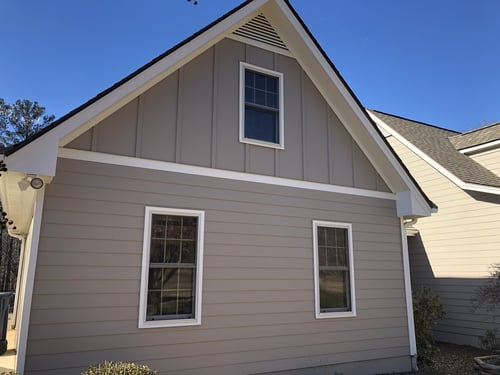
1. Light Neutrals (White, Cream, Soft Gray)
These are the safest performers in the Southeast, regardless of material. Light colors reflect sunlight rather than absorbing it, which keeps surface temperatures significantly lower than darker alternatives. White and cream have been the default choice for Georgia homeowners for decades, not just because of aesthetics, but because they hold up. Soft gray has become increasingly popular in Athens-area neighborhoods as a slightly more contemporary option that carries the same heat-reflective benefits.
2. Mid-Tone Earthy Neutrals (Sand, Warm Taupe, Sage Green)
Mid-tone earthy shades are a reasonable middle ground for Georgia's climate. They absorb more heat than white or cream, but considerably less than deep or saturated colors. Sage green and warm taupe complement the tree cover and natural surroundings common in Athens and Oconee County neighborhoods, and neutral siding in these ranges tends to hold its resale appeal across buyer preferences. On a fiber cement product like Hardie, these mid-tones are especially well-suited, as the color is baked into the finish system and holds significantly better than paint on vinyl over time.
3. Darker Colors With the Right Material Behind Them
On vinyl, dark colors require verified UV resistance ratings and specific product specs to avoid warping. On James Hardie fiber cement, the material constraint largely goes away, which is why homeowners who want charcoal, navy, or deep green exteriors are better served by fiber cement than vinyl in this climate. Dark siding continues to trend in 2026, and Athens homeowners who want that look without the maintenance headaches of warping vinyl typically land on Hardie as the right foundation for it. A knowledgeable Athens siding installation contractor can walk you through which Hardie products and finish systems are rated for the color depth you're after.
Colors to Avoid on Vinyl Specifically
Any saturated or dark color without a verified UV-resistance rating is a risk on vinyl in this climate. That includes standard black, deep brown, and highly saturated reds or blues that aren't specifically rated for southern heat exposure. Warping is significantly more common with darker vinyl, and Athens summers are long enough that the accumulated thermal stress shows up fast.
If you're repainting existing vinyl rather than replacing it, never paint to a color darker than the original. The underlying vinyl wasn't manufactured for the heat load that a darker color creates. If getting a darker exterior finish matters to you, replacing vinyl with fiber cement is a more durable path than pushing vinyl past its thermal limits with paint.
What to Do If Your Siding Is Already Warping
Some warping can be addressed at the panel level. Heat damage that exceeds vinyl's tolerance threshold of approximately 165°F typically requires panel replacement rather than repair, as the material has permanently deformed. For localized warping near a window or grill, replacing the affected panels and addressing the heat source is usually sufficient.
Widespread warping across a wall or elevation typically points to an installation issue that patch repairs won't fix. If the panels were fastened too tightly throughout, the stress will keep affecting whatever goes back up in the same way. That's also the point where a lot of homeowners decide to get a professional siding assessment rather than continuing to repair the same sections, particularly if the warping is accelerating or there are signs of moisture getting behind the panels.
The benefits of James Hardie Siding
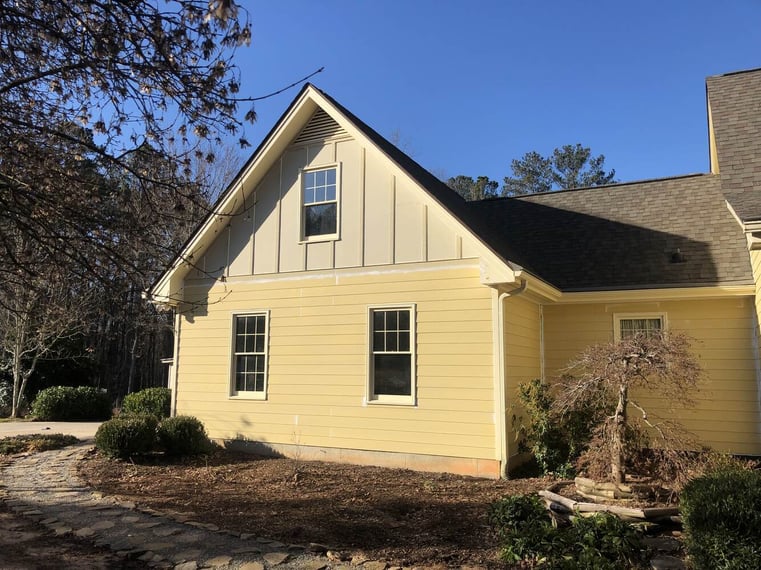
Vinyl warps because it's a thermoplastic, so heat changes its shape permanently once you cross the tolerance threshold. James Hardie fiber cement siding is engineered from a completely different material base: cement, sand, and cellulose fiber. It doesn't expand and contract the way vinyl does, which means the temperature swings that buckle vinyl panels don't affect it the same way.
In a climate like Athens, where you're dealing with sustained summer heat, high humidity, afternoon thunderstorms, and the occasional freeze, fiber cement holds up where vinyl struggles.
A few specific advantages of it include:
- It doesn't warp in heat. Fiber cement is dimensionally stable at temperatures well above what vinyl can handle, which is why you don't see Hardie panels buckling the way vinyl does on south- and west-facing walls.
- It's moisture-resistant. Georgia's humidity and rainfall create conditions where moisture works behind siding and degrades the wall assembly over time. Hardie is engineered to resist moisture penetration, which matters on a house that sees 50+ inches of rain per year.
- Darker colors are actually viable. Because fiber cement doesn't absorb and transfer heat the same way vinyl does, you have significantly more flexibility with color, including deeper shades that would cause a vinyl panel to warp within a season or two.
- The warranty is designed for southern climates. James Hardie's HardieZone® system accounts for regional climate differences. HZ10 products are specifically engineered for hot, humid climates like Georgia's.
For homeowners weighing the long-term cost picture, Hardie siding typically lasts 30–50 years in Athens conditions, considerably longer than the 20–30-year lifespan most vinyl carries in this climate.
The Bigger Picture: Siding as a System
Color and material choice matter, but they don't operate in isolation. Siding performs as part of a system that includes the weather-resistant barrier underneath it, flashing at transitions, and adequate ventilation in the cavity behind the panels. Warping that clusters near windows, doors, or roof-to-wall transitions can indicate flashing gaps or moisture issues that a color change alone won't solve.
If you're planning new siding and want to understand the full cost picture, the average cost of siding installation in Athens varies significantly by material and scope. So be sure to ask your contractor for quotes before you proceed.
Frequently Asked Questions
Why Does Vinyl Siding Warp in Summer?
Vinyl expands in heat and contracts in cold. When panels are installed too tightly, they buckle outward as temperatures rise. Dark colors compound the problem by absorbing more heat. Athens summers, with sustained highs above 90°F and nearly three months of peak heat, create conditions where these issues become visible quickly.
What Are the Best Vinyl Siding Colors for Georgia's Climate?
Light neutrals — white, cream, and soft gray — perform best because they reflect heat rather than absorbing it. Mid-tone earthy shades like warm taupe and sage green are a reasonable middle ground. Dark colors carry real warping risk on vinyl in this climate unless the product has a verified UV resistance rating.
Is James Hardie Siding Better Than Vinyl for Georgia's Climate?
For most Athens homeowners, yes. Fiber cement doesn't expand and contract the way vinyl does, which eliminates the warping problem entirely. It's also more resistant to moisture, impact, and UV degradation, which all relevant factors in a climate with hot summers, heavy rainfall, and high humidity. The tradeoff is higher upfront cost, but the lifespan and maintenance profile over 30–50 years typically justify it.
Can Warped Vinyl Siding Be Repaired, or Does It Need Full Replacement?
It depends on the cause and extent. Localized warping from a heat source like a grill or Low-E window reflection can often be addressed with panel-level replacement once the source is dealt with. Widespread warping from improper installation typically means the full elevation needs to come down and go back up correctly, as patch repairs on top of a bad installation don't hold.
Is It Safe to Repaint Vinyl Siding a Darker Color?
Not with standard paint. The vinyl wasn't manufactured to handle the heat load a darker color creates, and warping usually follows within a season or two. If a darker exterior is the goal, fiber cement gives you that flexibility without the thermal risk.
How Do Low-E Windows Cause Siding to Warp?
Low-E windows reflect sunlight rather than absorbing it, which can concentrate heat onto adjacent siding surfaces. That reflected heat is sometimes intense enough to warp or partially melt vinyl panels, even on a correctly installed home. Window film, shade solutions, or adjusted landscaping near the affected area can help, but if the siding is already deformed, those panels need to be replaced.
before you hire a Contractor
Not every contractor who offers siding work has an understanding of Georgia's climate and how it affects siding performance. Before you hire a contractor, ask these questions:
- Do you install James Hardie fiber cement? If a contractor only works with vinyl, they may not have a full picture of your material options, especially relevant if you're replacing warped siding and want a longer-term solution.
- How do you handle expansion clearance during installation? The answer tells you immediately whether they understand vinyl's thermal movement requirements. A contractor who can't explain it clearly is a risk.
- What's your process when you find moisture or sheathing damage behind the old siding? Replacing siding without inspecting and addressing what's underneath is a common way to re-create the same problems within a few years.
- Are you familiar with HardieZone® specifications for Georgia? Proper Hardie installation in the Southeast requires using HZ10-rated products and following the corresponding installation guidelines. It's a detail that separates contractors who know the material from those who treat it like any other product.
- Can I see completed projects in the Athens area? Local references and a portfolio of local work matter more than general credentials. Athens homes have a specific character, and experience with this area shows in the work.
Get Encompass Contracting on your siding
 Encompass Contracting has proudly served homeowners in Athens, GA, and the surrounding communities with high-quality siding installation and exterior remodeling for more than 15 years. We believe your home should always feel personal, and that belief guides every siding project we take on, from the first site visit through the final walkthrough.
Our team specializes in James Hardie fiber cement siding, and we bring the kind of local knowledge that matters in this climate. We know what Athens summers do to exterior materials, and we know how to install siding that holds up to them. From color selection to installation specs to the moisture barrier underneath, every detail gets the attention it deserves.
From start to finish, we prioritize clear communication and a thoughtful design-build approach, so you always know what's happening and what to expect. You can browse completed projects in our gallery to see the quality of the work before you ever pick up the phone.
Contact Us
Connect with our team to schedule a free consultation today.